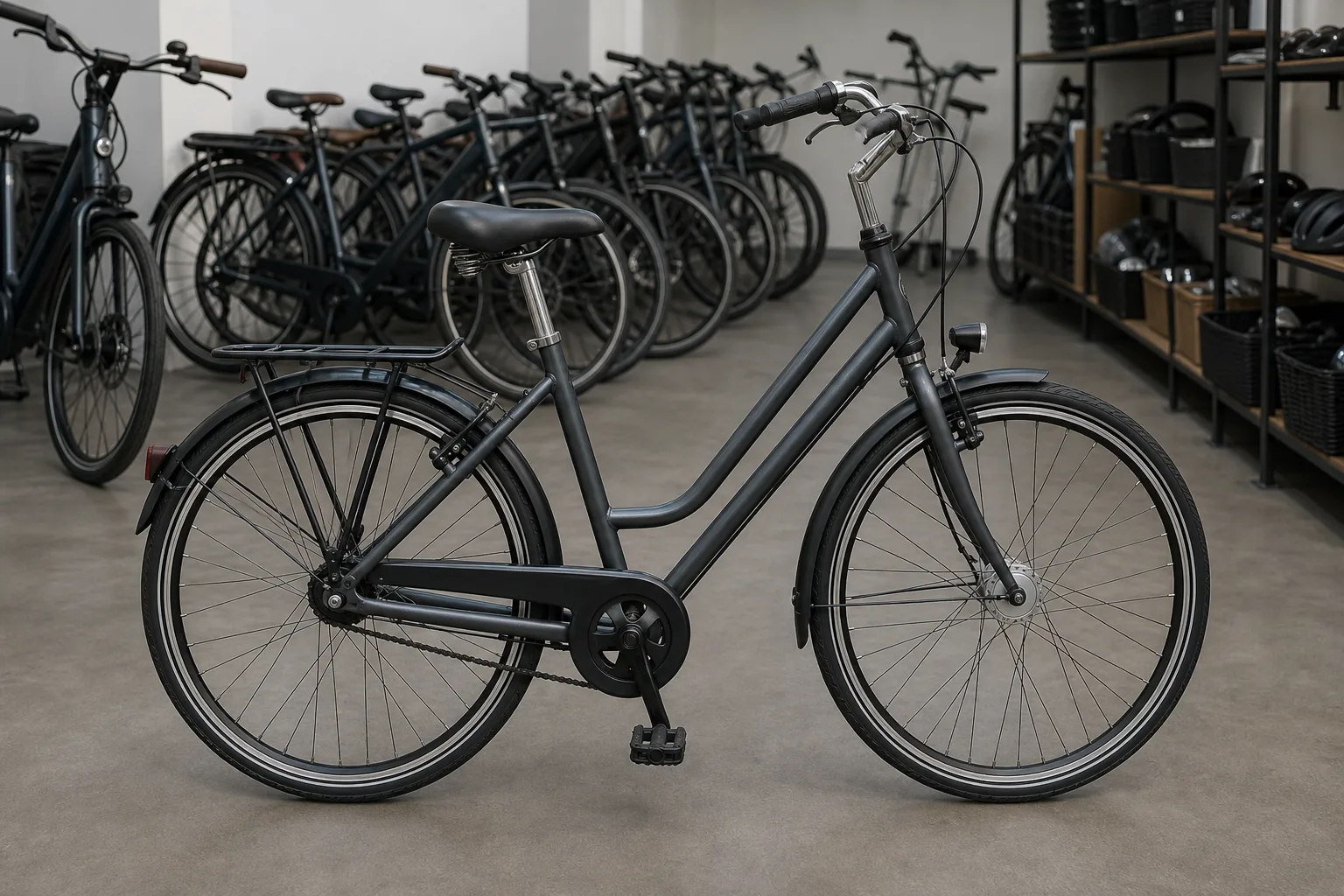
A cruiser feels right in the store for reasons that have nothing to do with whether it will suit you at mile three on a windy Saturday. The floor is flat, the distance is twenty feet, and the salesperson is standing there watching. Almost any bike feels fine under those conditions, which is precisely the problem. The checks worth doing are quick, but they are not the ones most people do instinctively, and they depend on understanding one piece of geometry that separates an upright comfort bike from everything else on the sales floor.
The seat tube angle moves the saddle behind you
On a road bike the seat tube stands close to vertical, so the saddle sits almost directly above the bottom bracket and raising it lifts you more or less straight up. A cruiser's seat tube is laid back, sometimes dramatically, which means the saddle travels backward as well as upward every time the post comes out of the frame. Raise it two inches for proper leg extension and you have also moved yourself an inch or so farther from the handlebar. That single fact explains most of the confusion that follows.
It also explains why two cruisers with identical published frame sizes can feel entirely different. One may put the saddle a long way behind the cranks and demand a swept-back bar to compensate; another may sit you nearly upright over the pedals. Neither is wrong, but the reach to the grips is what you will actually notice after twenty minutes, and no chart on the wall records it.
Standover clearance is not a fit measurement
Standover tells you one thing: whether you can straddle the top tube without injuring yourself when you stop suddenly. It is a safety clearance, and the Consumer Product Safety Commission oversees the federal requirements that govern bicycles sold in the United States. It is not evidence that the bike fits. A careful shopper checks standover, notes the answer, and then sets it aside entirely, because saddle height is determined by leg length and crank position, not by the height of a tube you are no longer touching once you start pedaling.
The failure mode is buying a frame small enough that the saddle must be pushed near the top of its usable insertion to get proper leg extension. That looks like a fit and rides like a compromise: the post flexes, the reach stretches out because of the seat tube angle, and the bike develops a vague, wobbly quality on rough pavement. Try the next size up before deciding the small one felt reassuring.
Both feet flat on the ground is the wrong target
The instinct is understandable and almost always leads to a saddle two or three inches too low. Sitting on the saddle with both heels planted means the knee never straightens through the pedal stroke, which loads the front of the knee, tires the quadriceps quickly, and makes short flat rides feel like work. What you want instead is a slight bend at the knee with the heel on the pedal at its lowest point, and the ability to slide forward off the saddle and put a foot down when you stop.
Cruisers make that easy, because the laid-back post and the wide saddle give you room to shift forward onto the nose. Practice the dismount a few times in the parking lot. If you can stop, slide, and stand comfortably, the saddle is not too high, whatever your feet do while you are seated.
Why size charts mislead on step-through frames
Most charts convert your height into a seat tube length measured from the bottom bracket to the top of the tube. On a step-through frame that number describes almost nothing useful, because the top tube has been dropped or curved away and the seat tube itself is often short by design, with a long post making up the difference. Two step-throughs labeled seventeen inches can put your hands in different zip codes. Ignore the label and measure what matters: the saddle height you actually need, the reach to the grips, and whether the post has enough remaining insertion to be safe at that height.
What ten minutes on the road will tell you
Ask to ride outside, on real pavement, for long enough to stop caring about the bike. Check four things. Whether your hands carry weight or simply rest on the grips. Whether you can look over your shoulder without steering. Whether the brakes reach your fingers before your wrist rotates. And whether, coming to a stop, the dismount already feels automatic.
Ten minutes is enough to expose a saddle set too low, a reach set too long, and a bar rotated to an angle that pushes your wrists outward. All three are adjustable, most of them for free, and a shop that expects the question will make the changes before you pay rather than after.